
Nematoda (Roundworms)
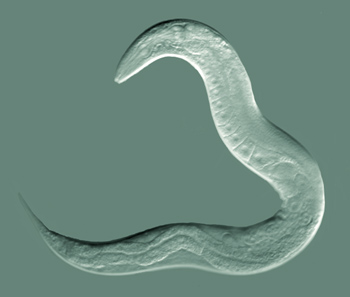
Once known as “Aschelminthes”, members of the Nematoda phylum are fairly common, but not in the way that you’d think…as many as 1.2 billion people around the world have a type of roundworm residing in their intestines! Despite their off-putting habitats, these creatures are very important to the evolutionary chain, as they are the first to possess a pseudocoelom (false body cavity):
Pseudocoeloms are very similar to coeloms (real body cavities) except for a key difference:
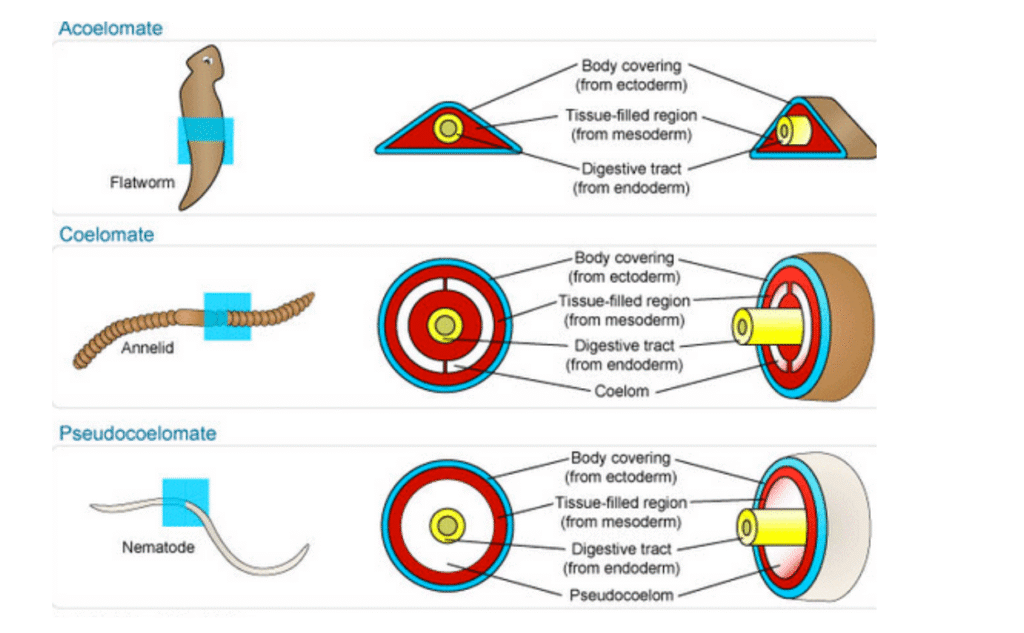
While a coelom has tissue surrounding the organs inside the cavity, a pseudocoelom does not, and the organs are instead “free-floating” in the cavity. However, a pseudocoelom is still an upgrade, as it allows the organs to be more flexible and have more space to move around. Image credit Life Sciences 11 Notes.