Nervous System
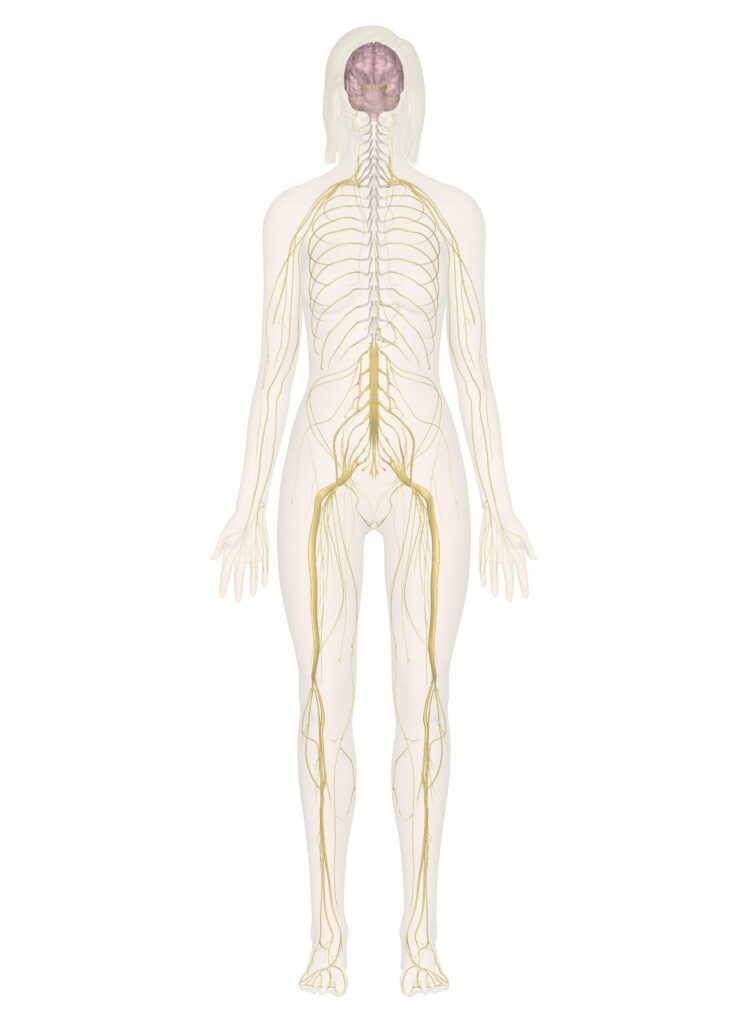
The nervous system allows us to think, move, breathe, and perform involuntary functions every day. In many ways, the nervous system makes up the very essence of who we are, as it enables cognition and voluntary movements. Without the nervous system, all of the other systems in our body would not work: our heart would not beat, and we would not be able to blink or swallow. Because of this, the nervous system, which controls all other systems, is very important to understand.
The Brain
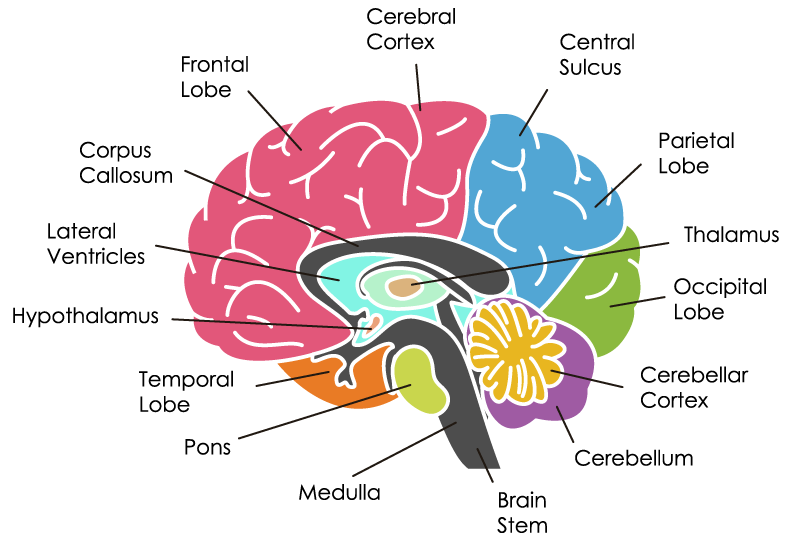
The brain begins at the brain stem, which controls involuntary functions. It allows us to perform actions necessary for survival unconsciously, or without thinking about them. The cerebellum, which is next to the brain stem, controls balance and posture and ensures coordination. The thalamus and hypothalamus are involved in sensory processing and homeostatic regulation, and the corpus callosum connects the right and left hemispheres of the cerebrum. The cerebrum has four main lobes, which are the frontal lobe, the parietal lobe, the temporal lobe, and the occipital lobe. These lobes are associated with higher-level cognition, such as rational decision-making and logic.
Here is a video about the nervous system. It explains the function of neurons in depth.