
Mollusca
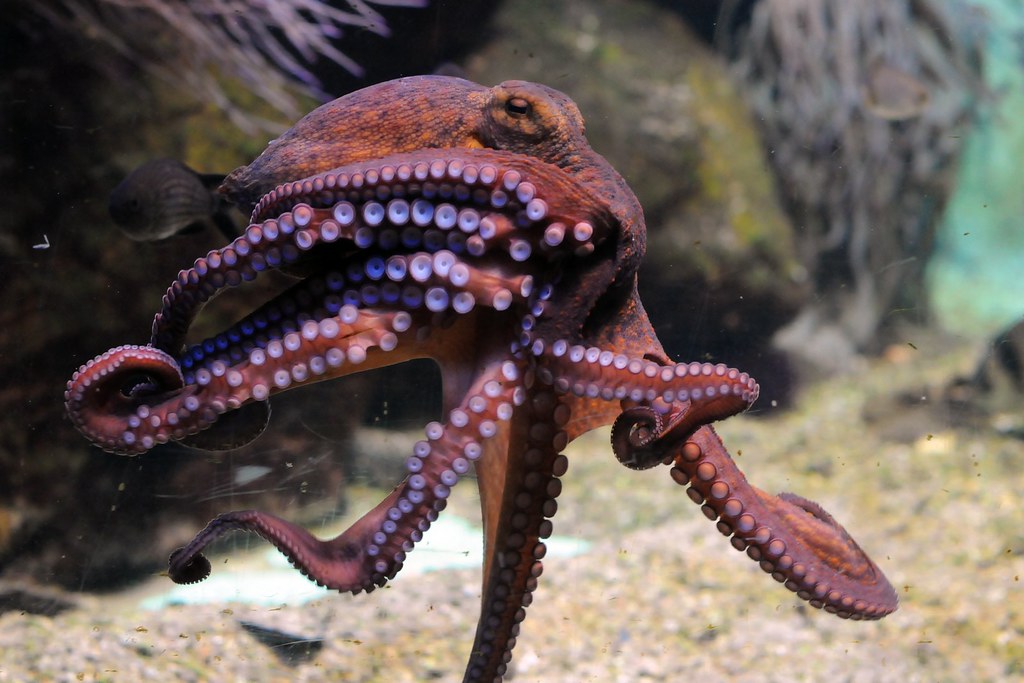
From land-dwelling snails to creatures of the deep sea, molluscs are incredibly diverse, yet share at least one common characteristic: their shells. Let’s take a look at how their shells differ:
All molluscs have shells, whether they are visible or not:
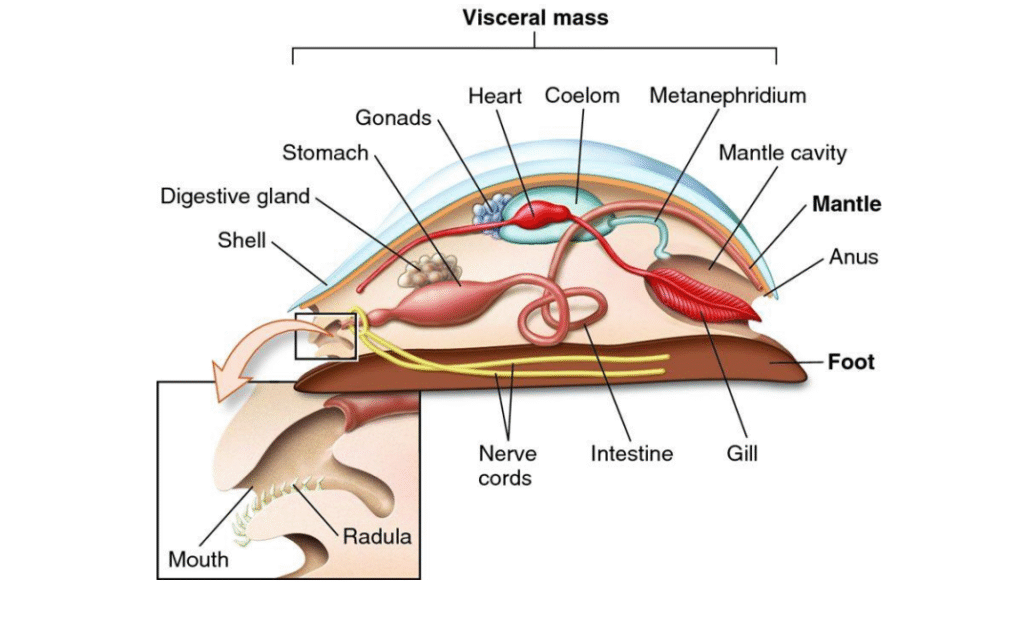
Their shells are produced by the mantle, and typically sit on top to protect their soft bodies from predators and other harm. In animals such as octopuses and squid, which don’t appear to have shells, they actually have a “shell” on the inside: when dissecting a squid, you can often find the “squid pen” located just above the collar.
Polyplacophora:
- Name meaning: “Many plate bearing”
- Example: chitons
Gastropoda:
- Name meaning: “Stomach, foot”
- Example: snails
Bivalvia:
- Name meaning: “Two valves” (two shells)
- Example: clams
Scaphopoda:
- Name meaning: “Shovel foot”
- Example: tooth/tusk shelled animal
- Shells were once used as currency by First Nations peoples
Cephalopoda:
- Name meaning: “Brain, foot”
- Example: octopuses