
Annelida
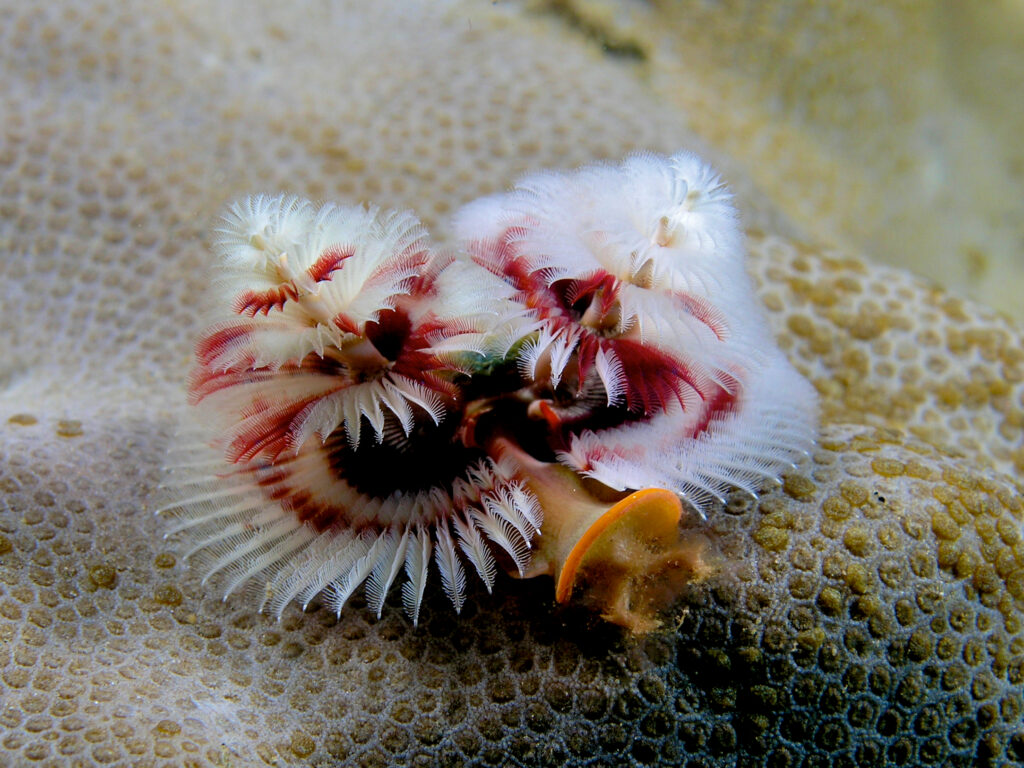
From earthworms to the beautiful Christmas tree worms pictured above, members of the phylum Annelida come in all shapes and sizes. They play a variety of roles, from acting as decomposers in the ecosystem to being used for medicinal purposes. An impressive evolutionary progression of this phylum is their digestive system, which looks very similar to the system that larger, more complex animals use:
Earthworms have a long intestine for digesting food, just like we do:
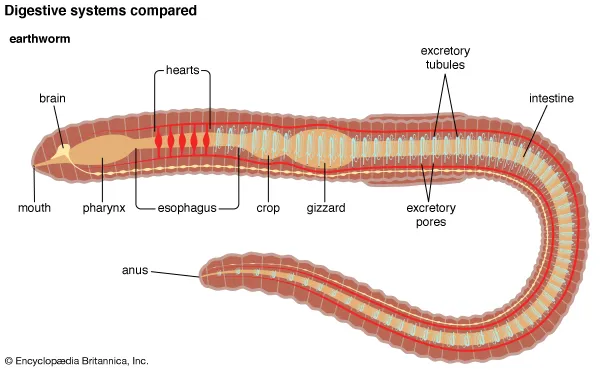
As pictured above, the worm possesses 3 stomachs: the crop, gizzard, and intestine. The crop stores food, the gizzard grinds up food using small rocks, and the intestine finishes digesting and eliminates the food. All three of these “stomachs” can be found in birds as well, and we possess a similar intestine.
Oligochaeta (earthworms):
- Have clear segments (metamere) with septa separating each segment
- Typically use tiny bristles known as setae to move through their environment
- Help break down decaying matter in the ecosystem
- Move by alternating the relaxation and contraction of their circular and longitudinal muscles
Polychaeta (sandworms/tubeworms):
- Use specialized gills known as parapodia for respiration
- Are dioecious- separate male or female organisms exist
- Excrete through metanephridia
- Live in mostly marine environments, but can also survive in freshwater
Hirudinea (leeches):
- Have specialized mouths for biting into prey and drawing blood
- Use two suckers to latch on to other animals
- Have a set number of segments (33 to 34)
- Were once used for medicinal blood drawing